Domestic BER FAQ


Frequently Asked Questions
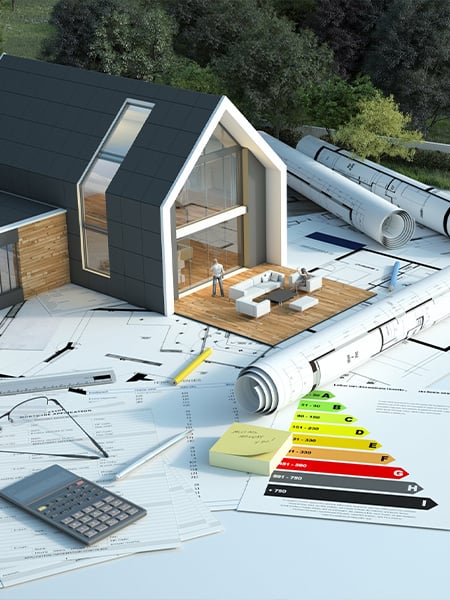
A BER (Building Energy Rating) Certificate is an official, standardised report that indicates your property’s energy efficiency. It rates your home on a scale from A to G, with A being the most energy-efficient and G being the least. The certificate provides an assessment of how energy-efficient your home is, helping you understand its potential energy consumption and costs.
An Advisory Report accompanies your BER Certificate and offers recommendations on how to improve your home’s energy rating. It provides specific guidance on steps you can take to increase the energy efficiency of your property, helping to lower energy consumption and costs.
To obtain a BER for your home, the Dwelling Energy Assessment Procedure (DEAP) is used to calculate the energy performance and carbon dioxide emissions related to a home’s space heating, water heating, ventilation, and lighting. A registered BER Assessor conducts an on-site survey to collect important details, including:
- Age and size of the property
- Type of heating system installed
- Type of wall construction
- Insulation levels in walls, ceilings, and attic
- Roof type
- Quality of window glazing and doors
This data is then entered into the DEAP software, which generates your BER Certificate.
The time it takes to complete a BER Assessment varies, as each home is unique. For a standard 3 to 4-bedroom semi-detached property, the on-site survey typically takes around 45 minutes. Larger properties or those with added complexities—such as extensions, retrofit works, or attic conversions—may require more time.
The timeline for producing your BER Certificate also depends on the complexity of the property and the information provided. However, we understand the importance of receiving your certificate promptly and will always aim to publish it as quickly as possible.
Having all necessary documents and information prepared before your assessment can significantly reduce the time needed to complete your BER Certificate and Advisory Report. We will inform you in advance of the survey about what documents and information are required to complete the assessment efficiently.
The cost of a BER Assessment varies, much like the timescale, as every property is unique and may present different complexities. While there isn’t a single standard fee, we are committed to transparency and have provided a clear explanation of our fee structure here.
You need a BER in several situations:
- When selling or renting your property.
- When claiming an SEAI Grant for energy-related improvements.
- When applying for certain mortgage interest rates that are based on your energy rating.
- If you’re seeking advice on how to improve your home’s energy efficiency and reduce heating and electricity costs.
A BER helps ensure that your property meets energy standards and can also provide guidance for making your home more efficient.
A BER Certificate is valid for 10 years, provided no significant changes are made to the property that could affect its energy efficiency. However, if you make changes such as adding an extension, installing a new heating system, or upgrading windows, the BER may no longer accurately reflect the building’s energy performance. In such cases, a new BER assessment should be conducted to account for these updates.
All BER Certificates & Advisory Reports are published on the National BER Register. The BER Register is maintained by the SEAI. You can locate a BER Certificate and Advisory Report for any property by searching with the MPRN number. Please see link here to the register.